As several visitors to my site have asked about purchasing a copy of this book, I thought it time I gave the details of where you can purchase it world-wide. See poster above for the distributor’s contact. Also, I include a recent review of the novel, which I am most happy to share with you all.
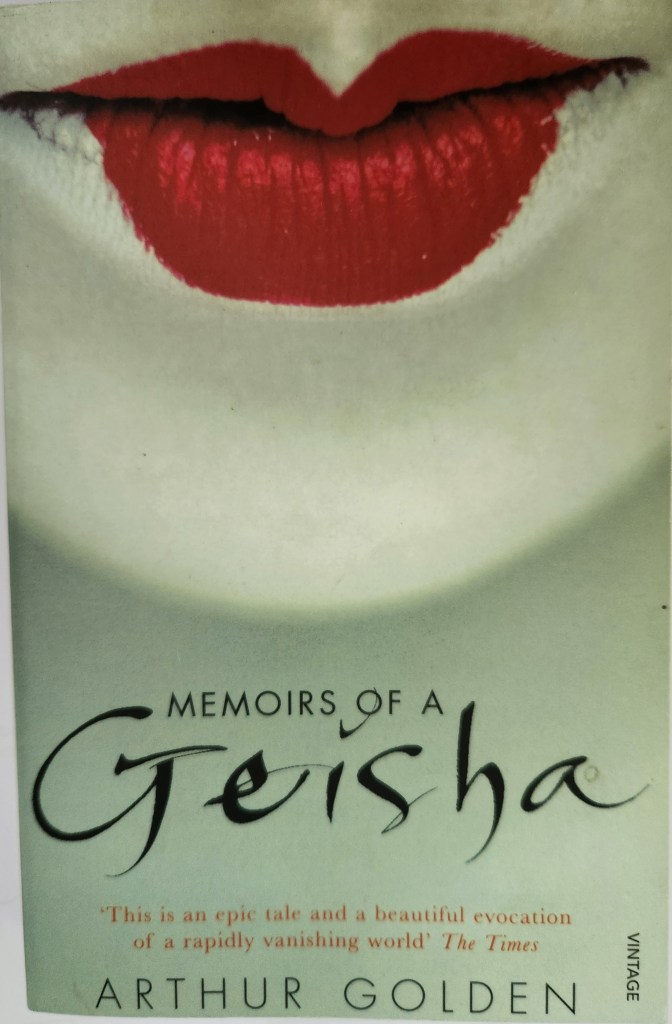
Recently I began helping out at a second-hand bookshop, and came across Memoirs of a Geisha, by Arthur Golden. The title was familiar, but after reading the foreword, decided I’d missed reading it somehow. It was published in 1998, three years before I went to live and work in Japan.
I knew little of the country when I arrived, but when It came to time leave, the place and its people were a part of me.
I made close friends, and was invited into their homes, to enjoy meals, attend art classes, and cultural events – such as New Year celebrations and rituals. These memories floated through my thoughts as I read Memoirs of a Geisha.
I apologise for the lack of posts and comments on others posts. The intention has been to write about something other than THAT book (a sketch for a change perhaps?), but truly it’s a topic I can’t get rid of, just yet. I’ve yet to prepare words for a speech, and practice reading a passage aloud for the book for the launch this coming Thursday, and also be part of the gang creating canapés for the occasion. Boy, have I been stressed! Even my usual bubble-bath soak hasn’t rid me of my anxiousness. And then, last Thursday I received the first review of Mrs Forsythe by Terry Toner from Dusty Shelves. (See image above).
Last week I put up a new page on my WordPress site about my books. I have yet to flesh it out, with links to reviews and the like, but take a look, I am open to advice.
This week I received cartons filled with my new book, Mrs Forsythe, and then a different kind of busyness began. My publicist had sent me a list of reviewers I was to send copies to, so they could read it and make fabulous comments (I hope!). Every part in publishing a novel takes time, and wrapping and addressing each book is just part of that process.
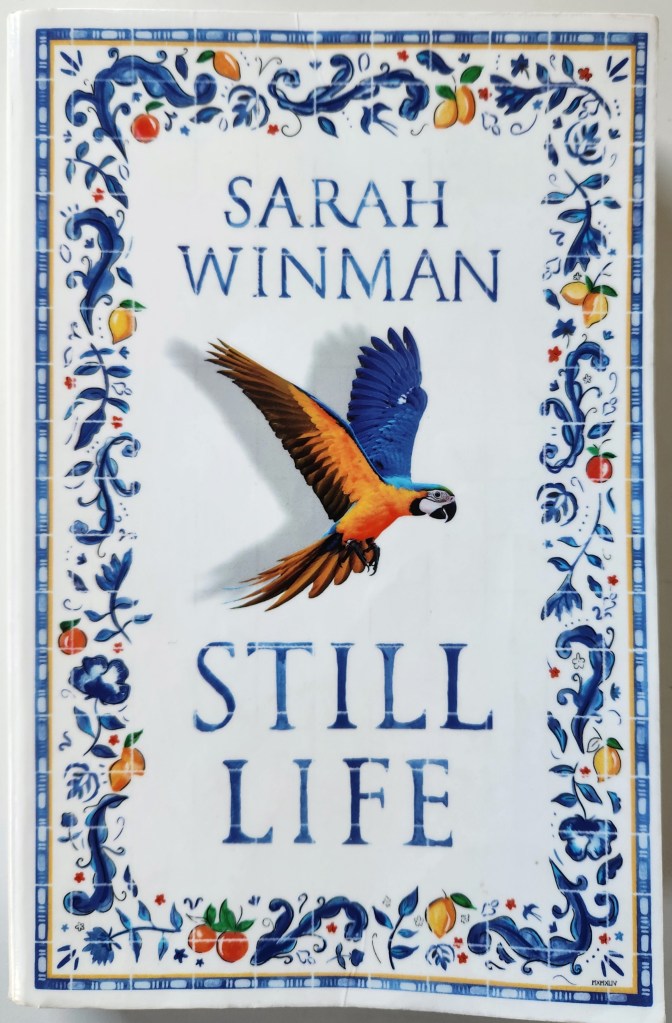
The week started well. Get hold of a good book and there’s no stopping me; waking early and reading for hours until the clock reminds me it’s way past getting up time. I’m talking about Sarah Winman’s novel Still Life. A warning; there is nothing still about this narrative. It contains great characters, settings, and themes like unrequited love that keep you turning the pages to find out, do they? Or don’t they? until the end; or if you are a lover of art, then this is for you, as there is plenty in here to keep you enthralled. Especially in Florence, where a good deal of the action takes part. To quote from Patrick Gale who writes on the cover: ‘Harnesses big-hearted storytelling to a dizzying historical sweep to celebrate love in all available colours.’
So, with Still Life of one sort on my mind, the other Still Life beckoned to me, or rather, I spotted the large bowl of fruit on my table and knew what I must do and that was to sketch a still life to accompany the little rant above. Less is more sometimes, and thinking this I selected two pears and a small apple to comprise my Still Life.
I have used Faber Castell artist-quality coloured pencils, a combination of Apple Green, Cadmium, Yellow Ochre, Brown Ochre, Van Dyke Brown and Dark Sepia. I love nothing better than starting with a fresh sheet of drawing paper and seeing how my marks become solid forms through the rendering of colour and tone. I was pleased that this sketch took just an hour to finish, and not three days like the book. However, I love both versions of Still Life!
Still Life was first publishedin Great Britain in 2021 by 4th Estate
Katherine Mansfield (1888-1923) would be New Zealand’s best known writer of the short story. Thousands of students would have studied her in university; others would have read her just because she writes so well. I belong to both those camps. Katherine was born Kathleen Mansfield Beauchamp into a prosperous family, who lived in Tinakori Road, Wellington. She was bright, gifted in music and writing from an early age. But she felt a misfit in her family, thought her home ‘dull and claustrophobic’, and once she’d visited London as a teenager, yearned to live a liberated, and bohemian life, preferably abroad. She left for London on her own aged nineteen, became the writer she dreamed of being and never returned home. It is testament to her skill as a writer that we are still reading about her a hundred years after her death, and it is the book written to mark this centenary I especially wish to write about.
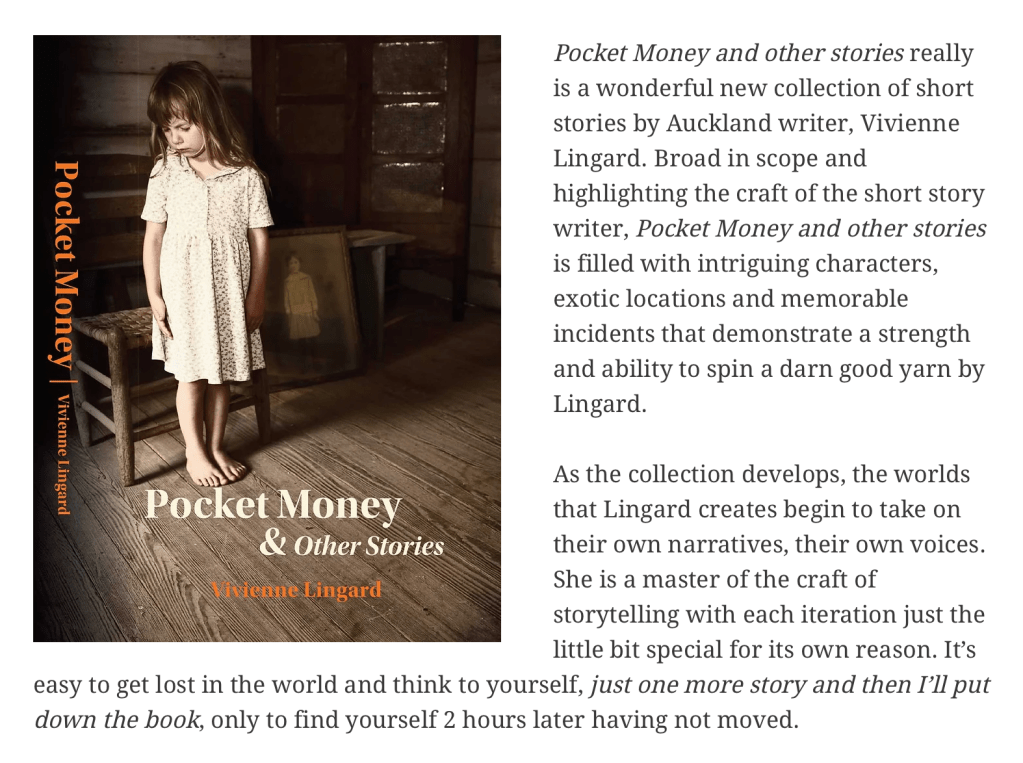
Some months back, when writing about my newly published short story collection, l promised to post any good reviews. I did receive a very good one last month, but it was in a newspaper and difficult to copy clearly. However, much to my surprise, another very positive review appeared last Friday in a website Booklovers. Chris Reed reviewed the collection, and what he said brought tears to my eyes – of joy. So, I would love to write about something joyous, when often there seems little to be joyous about (I’m talking World News here). I had to trim the page for a screen shot, but have included the link for the full read below.
Recently I struggled to finish a newly published book of short stories, which surprised me, as it had received reasonable reviews. The storylines were okay, but weren’t dynamic, and the characters didn’t draw me in. I just didn’t like all twenty of the stories, apart from one.
I was bewailing my dislike of this book to a writing friend, who told me I’d love Jhumpa Lahiri’s Interpreter of Maladies, a collection of short stories, and lent it to me.
We were thrust into level 4 Covid lockdown and I found myself without a book to read, and, libraries were closed. The thought of it! Thank goodness for Gabby, who said she would swap books with me. I put The Midnight Library (recently read) into a wee bag and walked (mask on) the few blocks to her letterbox and popped it inside. That afternoon, she did the same for me, and left The Elegance of the Hedgehog at my front door.
The title was intriguing. The setting was Paris, a favourite city. It didn’t take me long to start reading. Except the ruminating on Marx at the start almost made my head spin. But when the protagonist Renée introduced herself on page 15, I was hooked.
A friend recommended this book to me knowing that I was interested in memoir. She said it was beautifully written, as the caption on the cover also says. As individuals, we all come to reading with our own agendas, a particular way of viewing the world. I hoped that I would be captivated by William Horwood’s story, as I had found myself not engaging with many recent books I had read. But, this one, was so engaging, so compelling, I didn’t wish it to end.
Tally Stick:historical piece of wood scored across with notches for the items of an account and then spit into halves, each party keeping one.
I had been aware of the stack of Carl Nixon’s latest book every time I visited Paradox Books, a terrific bookstore just across the road from my home. I had a backlog of books to read, and was at the end of that pile when I decided it was time that I took The Tally Stick home. And was I pleased that I did!
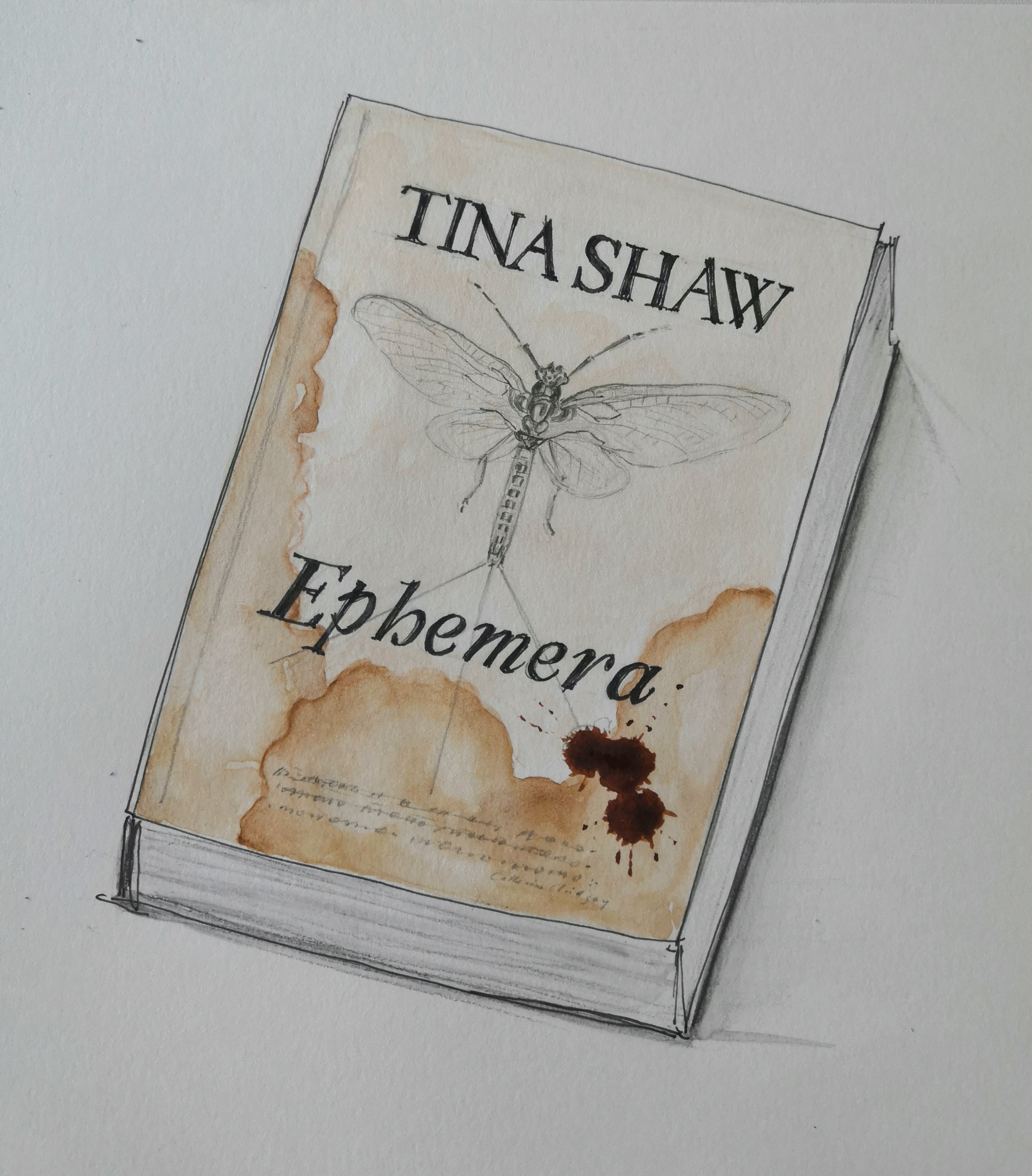
Imagine life seven years after a virus (an electronic one, the Crash) has taken down all electronic services world-wide. So, no computers, no devices, no plane towers, no planes, power or petrol. The only access to food is to grow your own; the only way to get around is by foot, bicycle, boat, or horse. That’s the premise of Tina Shaw’s latest novel, Ephemera. Continue reading →
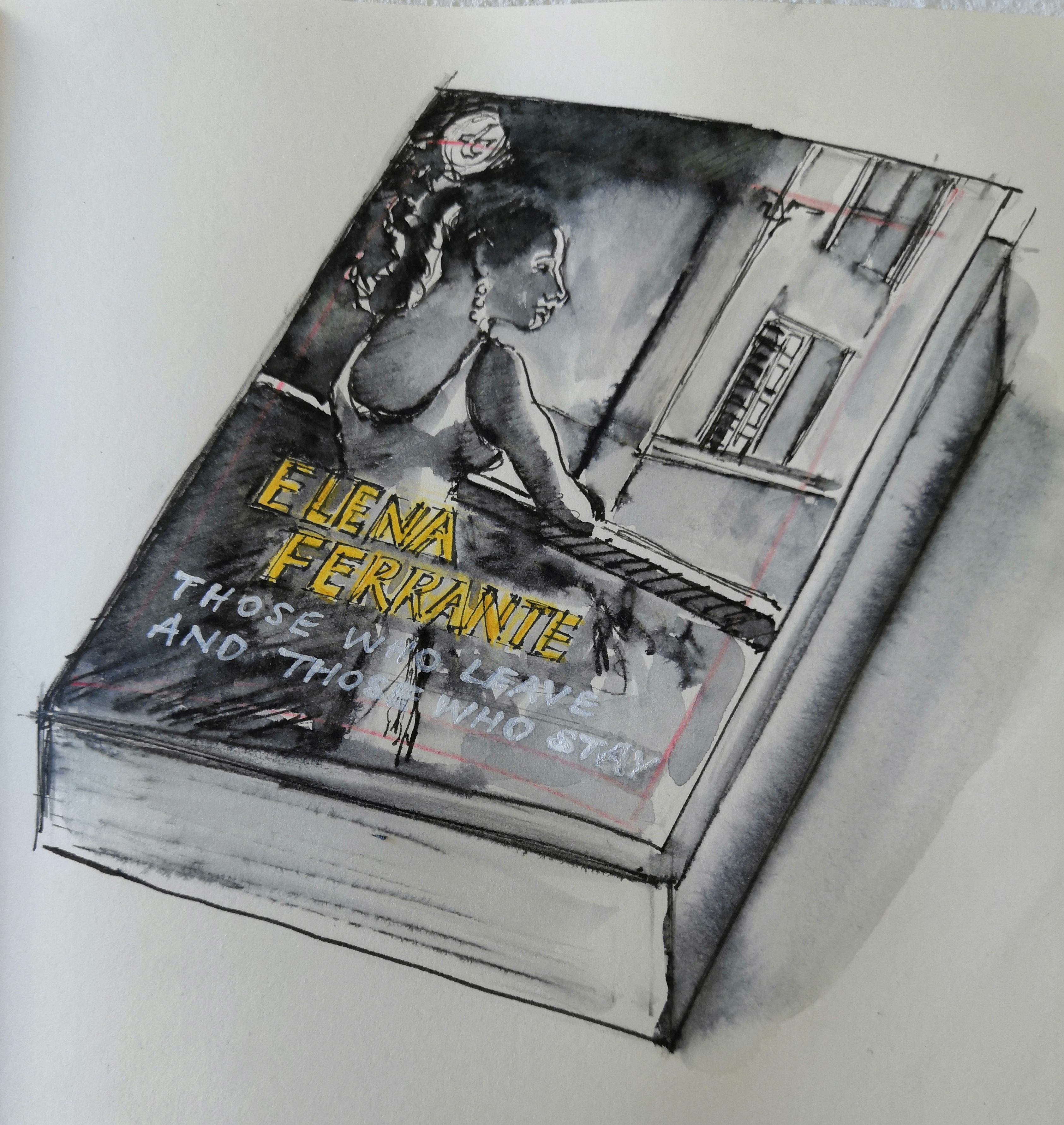
Sketching the cover of the book you are currently reading was on the list of suggestions that our sketch tutor gave us, to keep students busy while in lockdown for a month. It’s been a great motivator, and occupation, while (mostly) confined to our homes. Continue reading →
I may have not read My Brilliant Friend by Elena Ferrante if my friend Liz hadn’t passionately recommended it to me. I was down at the library to borrow it immediately. My reasons for haste were because I was going to stay with her in a couple of weeks and I wished to be prepared for the discussion about books and writing I knew we would have. Liz and I met as young teens, at school in the sixties, two clever but disaffected kids. Not unlike Lia and Lenù the main characters in Ferrante’s book, the first in her Neapolitan series, Book One: Childhood, Adolescence.Continue reading →
“Everyone should read this,” my friend Betty said, handing me a book she’d been telling me about. I glanced at the tile The Choice, noted it was an International Best Seller, and immediately slotted it in the popular novel category I mostly stayed away from. “It really is worth reading,” she emphasised, no doubt sensing my scepticism. I needed something to take my mind off my husband’s illness and my stressed state, so thanked her for the read and left.
That night, I couldn’t sleep and began reading The Choice. The author, Edith Eger, is a Holocaust survivor, but before I reach that part of her story, the introduction has captured me. Continue reading →