Off to Cologne – The Cathedral & Museum Ludwig.

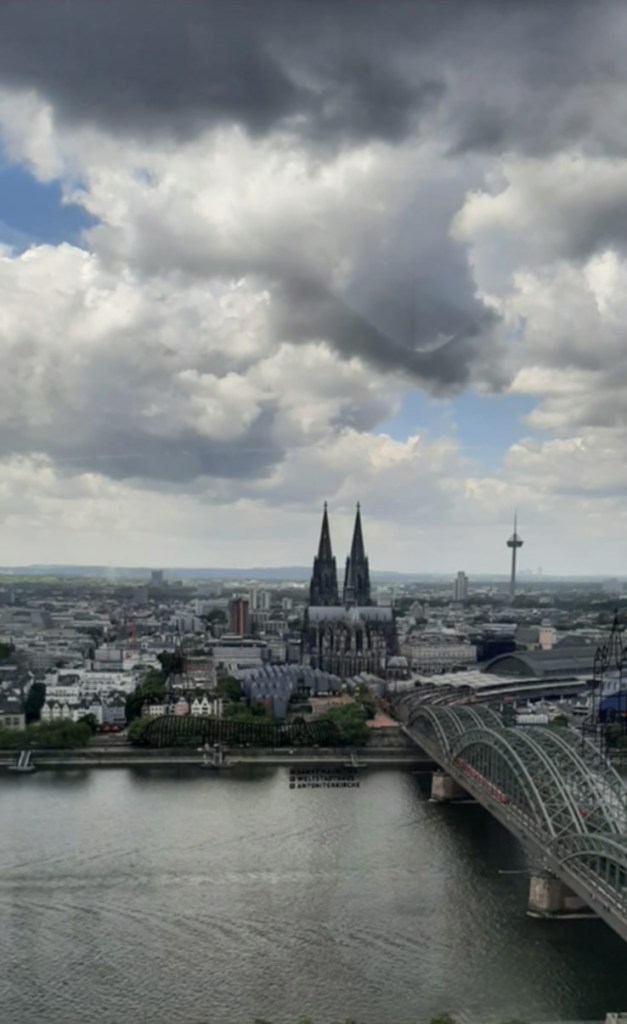
The spires of the Cathedral under a moody sky

We continued our cruise through the night from Dordrecht, with me dreaming of the wonderful windmills we had seen in Kinderdijk that day. The ‘ship’ docked in Monheim at approximately 9am on Friday. Soon after we were on a coach and heading into Cologne where we would begin our walking tour. Our destination – the Cathedral. We needed to cross the bridge, you see in the photo, but so did zillions of others, and rather like we found in Amsterdam, the pedestrians had to fight with cyclists for the same space. I was surprised when the tour guide told us that we would likely be shouted at, or even sworn at by cyclists! And although I was never sworn at, the walk across the bridge was certainly memorable.

Continue reading

Off to Cologne – The Cathedral & Museum Ludwig.

The spires of the Cathedral under a moody sky

We continued our cruise through the night from Dordrecht, with me dreaming of the wonderful windmills we had seen in Kinderdijk that day. The ‘ship’ docked in Monheim at approximately 9am on Friday. Soon after we were on a coach and heading into Cologne where we would begin our walking tour. Our destination – the Cathedral. We needed to cross the bridge, you see in the photo, but so did zillions of others, and rather like we found in Amsterdam, the pedestrians had to fight with cyclists for the same space. I was surprised when the tour guide told us that we would likely be shouted at, or even sworn at by cyclists! And although I was never sworn at, the walk across the bridge was certainly memorable.

Continue reading

It all started in Amsterdam

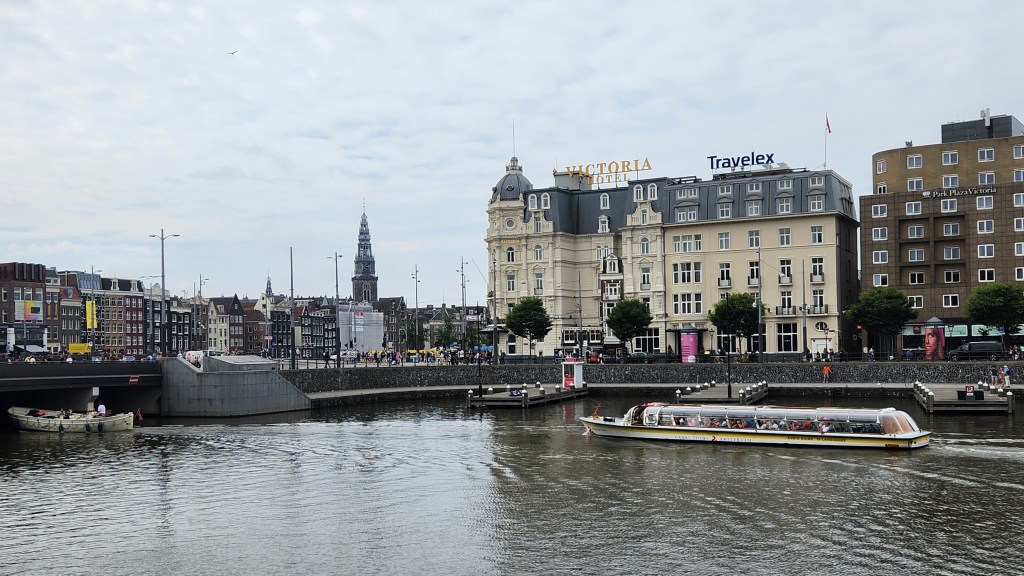
Amsterdam was where we would join the Viking Sigrun (they call it a ship, not a boat) and the other approximately 179 others who had chosen this trip up the Rhine for a week’s voyage. Kerry and I chose to arrive early in Amsterdam, giving us time to meet friends, and to rid ourselves of jet lag, after our lengthy flights from New Zealand. Over 36 hours should you wonder.

Continue reading

Frances Hodgkins’ wonderful legacy

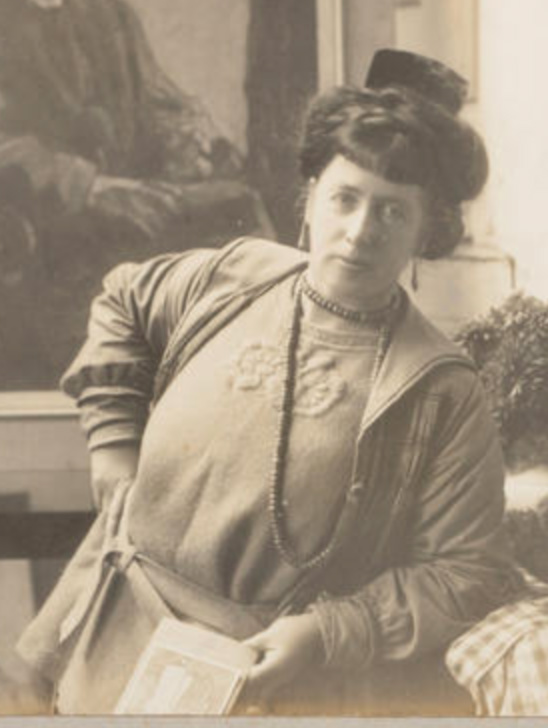
Frances Hodgkins (1867-1947)

When I learned the Gow Langsford Art Gallery in Auckland was holding an exhibition of New Zealander Frances Hodgkins’ paintings and Mary Kisler, an authority on Hodgkins, was to be speaking with gallery owner John Gow about the artist, I booked in immediately. I arrived early, as many were expected to attend, and I strolled around the gallery taking photos until the rooms swelled with viewers. I, like so many New Zealanders, have been attracted to Frances Hodgkins’ art for a very long time. Being an artist, I admired her determination not to be pigeonholed by any one style. She was adventurous, and prolific, working in many styles and mediums throughout her life. And although Hodgkins moved to Great Britain as young woman and spent most of her adult life there, she is still very much admired and loved by us here.

Continue reading

The penultimate session

Last week I started to work on an invented background for my painting, as the room lacked ambience. Once home I spent some time trying to improve on the colours and build more interest to the painting as a whole.

First thing was to correct the position of the right leg. I was still struggling to get the thickness of my paint as I wanted, and it always seemed to come out too thin even with medium. Never mind I told myself, I can always let it dry and add more layers.

And so, that’s what I did. At least by the time I’d put the canvas aside I could say that I almost liked it. But there was a way to go.

Continue reading

From sketch to canvas process

Continuing on from last week, when I showed you the charcoal sketch (see above) which I would be transposing onto an A2canvas. As I am going to take you through that process I thought it would help to include it here as this is the pose I shall continue to work from.

Continue reading

The next phase: sketching towards a painting

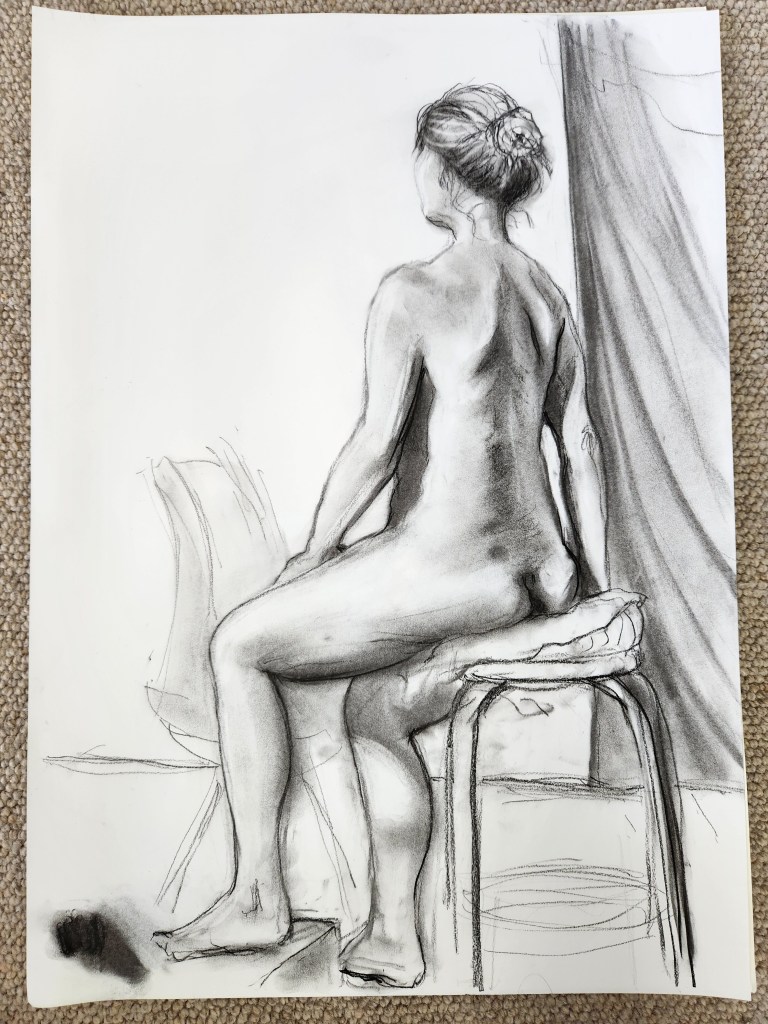
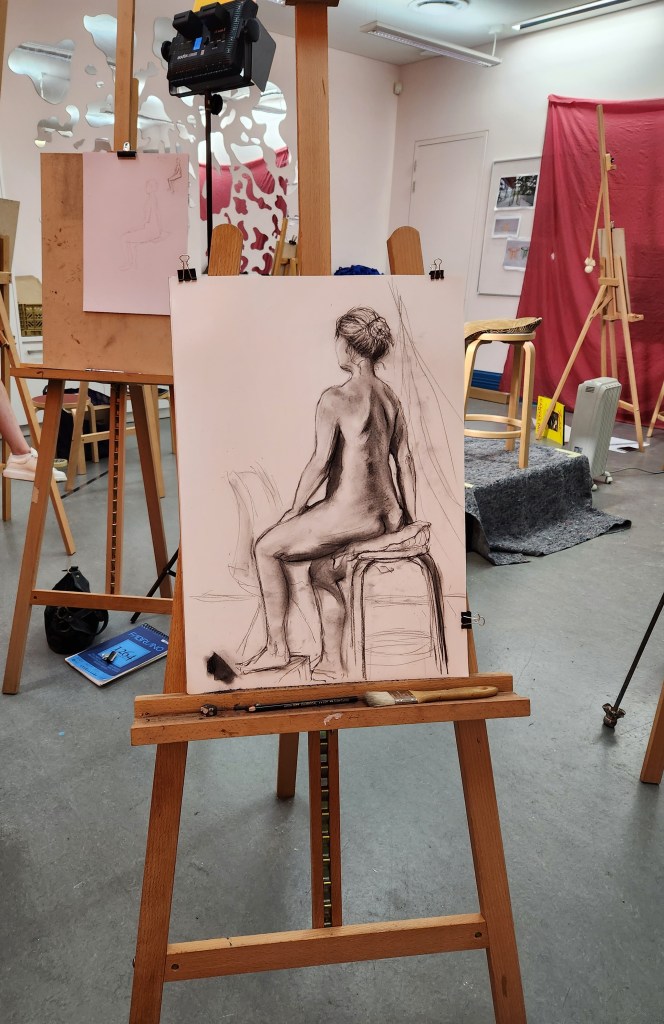
Week Three. In this session we were to work on A2 paper, using pencil or charcoal for our preparatory sketch. No photocopies this week. The model Lulu is similar in build to the figure we had copied in Goldie’s work – the idea being, we were told, was to execute a painting in tones similar to the one we had copied. But first, the pose needed working out, and so a few minutes were spent moving a stool, arranging a cushion, and having the light in an appropriate position to suit both the model and the class. We would be working with this same pose for three weeks. Hard on the model I thought.

I was pleased to be using my favourite drawing medium for this stage. Charcoal is such a forgiving medium and I just love the nuance of tone it allows one.

Continue reading

The work in progress: week two

Last week’s underpainting

Following last week’s effort, I thought a good deal about how I would approach the second class, realising there was a chance of not been offered any specific way in how to apply oil paints. I decided to progress my painting by instinct; it wasn’t as if I haven’t drawn from life, and although my painting history has revolved around fiddling with watercolour, I have used acrylics before. And, I do know a reasonable amount about colour, albeit using pencils rather than paint. During this session we were encouraged to go and view the original painting again. It was difficult to see the actual paint strokes as it was behind glass but we did agree the painting was lighter in tone and showed the colour more effectively than the photocopies we were working from.

Continue reading

Becoming a student again

by Charles Goldie (NZ artist 1870-1947)

On Saturday I attended my first of six art classes at the Auckland Art Gallery in painting the figure using oils. It’s been over twenty years since I last tried oils, and had all but forgotten what to do, so was keen to gain some new skills. The above image is the one the class was to attempt to paint from; presented to us in photocopied form, the colours even more subdued than the original image shows. We were also handed a slightly smaller version with a grid pattern superimposed. I looked at the grid, knowing it was often used for beginners learning to draw proportions. I hadn’t used one ever for sketching the nude. However, I was keen to do what everyone had been instructed to do, and set about marking up a piece of paper with the same grid proportions.

Continue reading

More on Frances Hodgkins

Frances Hodgkins working from her studio in Croft.

A few months back I was in Dunedin, and visited their very good public art gallery. I was thrilled to find an exhibition of works by New Zealander Frances Hodgkins I’d not seen before which were all completed in England. She was in London in 1939 at the start of the war, and for safety reasons I imagine moved to the Dorset countryside. She lived in Corfe Castle village on the south-west peninsula, where she remained until 1945. She was able to move a little between the small villages, and set up a small studio in nearby Croft. Because of the war-time restrictions foisted upon her, she set about documenting the rural life of small villages and communities in her paintings. She was often forced to stay indoors, whether through atrocious weather, or air raids and coastal gunfire. It is testament to the dedication she gave to her art practice that she was able to work under such conditions.

Continue reading

An ode to a fruit bowl

Featured

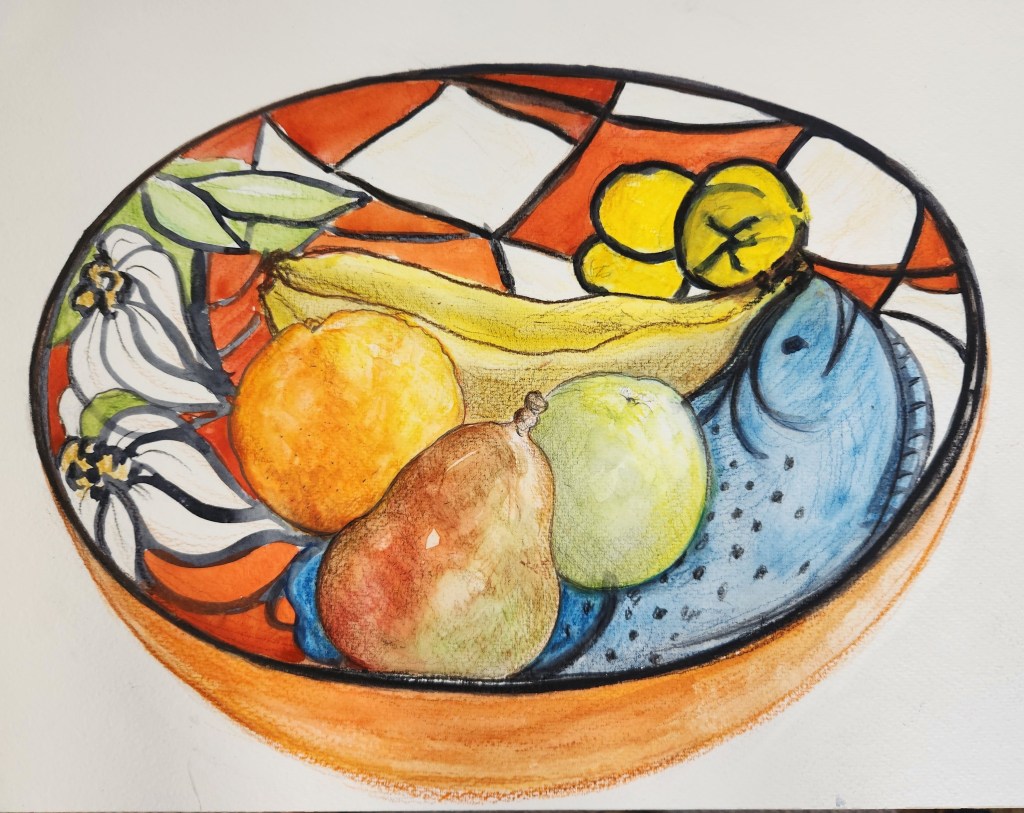
Dear bowl, I love you, with or without fruit. That is because you are both a vessel and an artwork. Some years ago I had the good fortune of working weekends at Palmerston North’s regional art gallery, where local artist Fran Dibble was exhibiting large boldly-painted bowls. What was even more special about these objects is that her potter mother had made the bowls for Fran to paint. Another great combination.

The finished sketch

Continue reading

An interesting fact about Turner

Featured

Yacht approaches the coast: JMW Turner c 1842

Last week I visited the Auckland Art Gallery Toi o Tamaki to see the Light from Tate: 1700s to Now exhibition. This was an interesting collection, as it featured many facets of how light was and is represented in art. The work stretched in time from the 18th Century to the present day. The first paintings were from Joseph Mallard William Turner, and anyone who has been fortunate to visit the Tate Gallery in London, will have viewed many of his famous landscapes with vast skies filled with light and texture. And for all that I enjoyed the whole show, I wish to write about a few paintings which appeal to the type of work I like to do.

Continue reading

Meeting Barbara at Heide

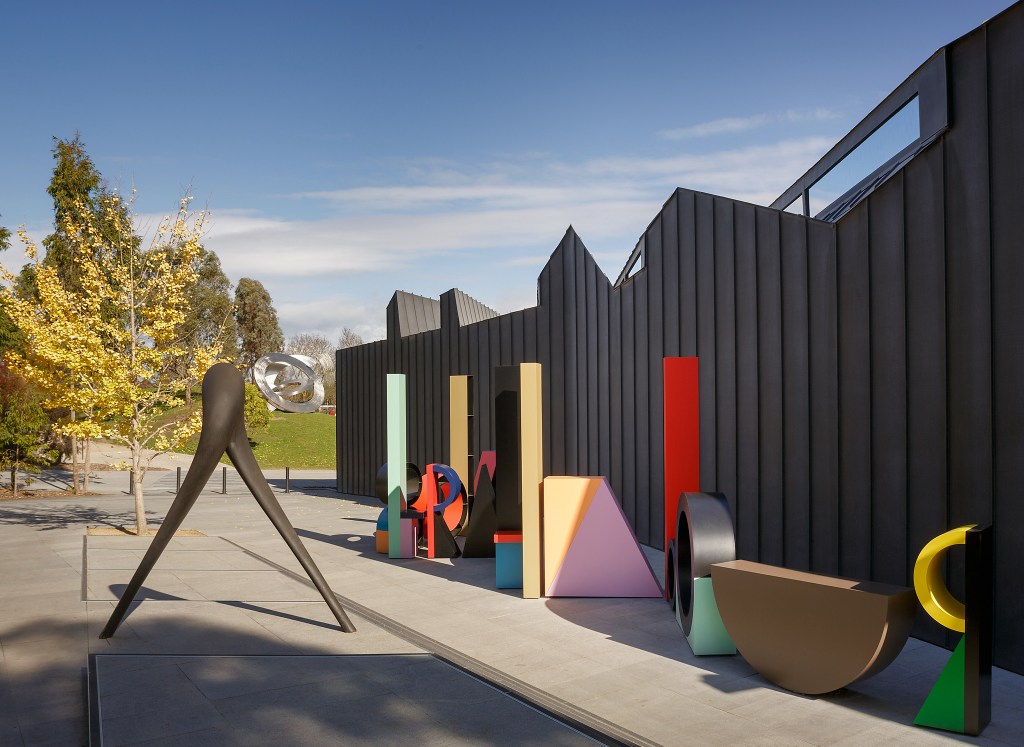
Photograph by Jeremy Weihrauch of the new face of the Heide Museum of Modern Art

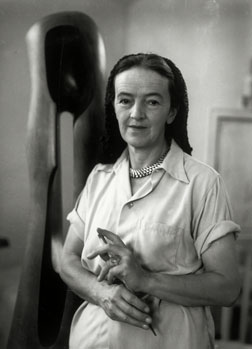
I was excited when invited to visit an art gallery in Melbourne I had visited before. The Heide Museum of Modern Art specialises in modern art and sculpture, is quite unlike others, and one I never tire of visiting. It is in Bulleen, a suburb of Melbourne, and was established in 1981 by art benefactors John and Sunday Reed. Thanks to their ideas and inspiration, the museum is a superb asset to the city, and sits well with the other, larger art galleries in the city centre. I was especially excited to visit this day, as they were featuring an exhibition of Barbara Hepworth sculpture. Hepworth is a British modernist artist and sculptor (1903-1975). > Barbara Hepworth

Continue reading

Travelling, and art in Melbourne

Featured

I feel a bit guilty, not having posted for some time, but not having the sanctity of my study nearby did that to me. And travel. I’ve been back a couple of days from a trip to Tasmania and Melbourne, Australia. Tasmania was new to Kerry and I, but not Melbourne, as we have visited often because of family and friends who call it home. The whole trip was eclectic, including the changes in weather and temperatures. Looking at different land forms, buildings, creatures and art. I still feel a little unsettled, but let me begin with some art that we saw.

Continue reading

Hundertwasser in New Zealand

Friedensreich Hundertwasser photo: Gerhard Krömer

Most art lovers will already know of Hundertwasser (1928-2000), an Austrian artist who lived in Vienna for many years of his life, and many will have visited the Hundertwasser House and museum opened in Vienna in the 1980s. But fewer will know of his link to New Zealand. In 1973 he travelled to New Zealand for the first time at the invitation of the Auckland City Art Gallery, where Hertha Dabbert had organised a travelling exhibition of his works. He visited the Bay of Islands during this time, and was so affected by the area that he returned a few years later and bought a farm. An impassioned environmentalist, he lived simply, off the grid if he could, returning from trips abroad, planting thousands of trees, establishing solar systems, and recycling as much material as he was able.

Continue reading